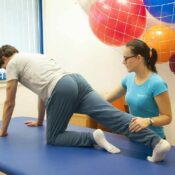
Acral Coactivation Therapy (ACT): Origins, Mechanisms, and Benefits for Posture and Pelvic Health

Acral Coactivation Therapy (ACT): Origins, Mechanisms, and Benefits for Posture and Pelvic Health
1. What Is ACT and Where Did It Come From?
Acral Coactivation Therapy, commonly abbreviated as ACT, is a physiotherapeutic method aimed at rehabilitating movement habits through motor learning, particularly by engaging the hands or feet (acral parts) in pressing exercises. Its genesis dates back to 1991 in Slovakia, where it was developed by a physical therapist working with post-spine surgery patients at the National Rehabilitation Centre in Kováčová. This method built upon earlier work by German physiotherapist Roswitha Brunkow, who originally applied pressing techniques in her therapeutic work.
In 2006, the therapy was formalized under the name “Acral Coactivation Therapy” at the REHASPRING rehabilitation center. Over years of clinical testing, it evolved into an integrated, user-friendly system for self-guided rehabilitation.
2. How ACT Works
Motor Learning via Repetition
ACT leverages the concept of motor learning—conscious processes rooted in the cerebral cortex—through high-repetition exercises, with some regimes involving around 2,000 repetitions to solidify new movement patterns.
Acral Press Exercises
A key feature is the use of the extremities—hands or feet—to apply pressure against resistance. This activates both ventral (front) and dorsal (back) muscle chains, promoting spinal alignment.
Spine Straightening and Activation of Deep Muscles
By coactivating opposing muscle chains and engaging the acral press, ACT encourages proper spinal alignment, improves postural stability, and strengthens deep core and expiratory muscles.
Reactivating Primitive Motor Patterns
ACT often incorporates positions and movement patterns from early motor development—movements we naturally learned as infants. These foundational patterns enrich and diversify our motor skills.
3. Impact on the Body, Pelvic Floor, and Posture
Posture Improvement
ACT’s emphasis on spinal coactivation helps correct postural imbalances by realigning the body through coordinated muscle activation.
A 2025 study demonstrated a remarkable 21° improvement in spine curvature for a student with idiopathic adolescent scoliosis after applying ACT interventions.
Pelvic Floor Support
Although direct research on pelvic floor impact is limited, ACT’s deep core activation—especially muscles connected with the basal diaphragm and pelvic floor—suggests significant stabilization benefits. This aligns with research showing that activating deep abdominal muscles supports the pelvic floor and increases intra-abdominal pressure.
Core and Breath Engagement
Press exercises can engage core, breath, and pelvic mechanisms in a coordinated manner, promoting abdominal and diaphragmatic harmony vital for stability.
4. Why Does ACT Work?
- High Repetition + Motor Learning: Frequent repetitions embed new, functional movement patterns at a neurological level.
- Connectivity Through the Extremities: Press-based coactivation recruits deep muscular slings and aligns the body’s structure for better motor function.
- Early Motor Pattern Re-engagement: By tapping into primal movement patterns, ACT reprograms natural, efficient movement strategies.
- Functional, Direct Impact: ACT offers tangible improvements—like improved posture and spine curvature—making its efficacy visible and measurable.
5. Comparing ACT with Pilates
|
Feature |
Acral Coactivation Therapy (ACT) |
Pilates |
|
Origins |
Slovak rehabilitation (1991), evolved by Brunkow and subsequent developers |
Early 20th century, developed by Joseph Pilates |
|
Core Focus |
Acral press and muscle coactivation for posture, spine, deep core activation |
Controlled movements emphasizing core strength, flexibility, alignment |
|
Mechanism |
Press-based motor learning through repetitive practice |
Dynamic exercise using body control, breath, and flow |
|
Scope of Movement Patterns |
Foundational, infant motor patterns reactivated through acral engagement |
Full-body movements, concentric/isometric contractions, stretch integration |
|
Evidence of Efficacy |
Scoliosis study showed notable improvements in posture |
Broadly used and researched in mat-based and equipment-based physical therapy |
|
Pelvic Floor Engagement |
Indirect via deep core activation |
Many Pilates exercises target pelvic floor directly—popular in rehabilitation settings |
Pilates is renowned for its comprehensive core and pelvic floor engagement, widely integrated into physiotherapy, especially for pelvic health—where ACT’s benefits are plausible but less formally studied.
6. History of the Methods
- Roswitha Brunkow: A German physical therapist born in 1916, recognized for early press-based therapeutic exercises (Brunkow method), later utilized by Slovak therapists.
- ACT Development: First formed in 1991 in Slovakia by applying Brunkow’s principles to motor rehabilitation; later standardized in 2006 as Acral Coactivation Therapy at REHASPRING.
- Pilates Evolution: Conceived by Joseph Pilates in the early 20th century, it focused on developing core strength, flexibility, and body control; now widely adopted in fitness and rehab settings.
Conclusion
Acral Coactivation Therapy (ACT) is a motor-learning–based physiotherapy approach anchored in deep muscular engagement and primitive movement patterns. It shows promise in enhancing posture and potentially supporting pelvic floor function. While Pilates offers a well-researched, body-wide regime with explicit pelvic floor benefits, ACT presents an innovative, focused alternative—especially for spinal correction and deep stabilization through seemingly simple, repetition-based techniques.
Would you like help designing an ACT routine or exploring specific pelvic floor-focused ACT exercises?
References
- ACT Method. History and Development of Acral Coactivation Therapy (ACT). ACT Method official site. Available at: https://www.act-method.com/en/ (Accessed: 22 August 2025).
- ACT Method. Motor Learning Principles and Repetition Requirements. ACT Method official site. Available at: https://www.act-method.com/en/ (Accessed: 22 August 2025).
- ACT Method. Spinal Straightening and Acral Coactivation Mechanics. ACT Method official site. Available at: https://www.act-method.com/en/ (Accessed: 22 August 2025).
- Haviarová, M. (2023). Application of the Acral Coactivation Therapy Method in the Treatment of a Student Diagnosed with Idiopathic Adolescent Scoliosis. ResearchGate. Available at: https://www.researchgate.net/publication/376666687(Accessed: 22 August 2025).
- Hodges, P.W., Sapsford, R. and Pengel, L. (2007). Postural and Respiratory Functions of the Pelvic Floor Muscles. Neurourology and Urodynamics, 26(3), pp.362–371. DOI: 10.1002/nau.20232.
- Herman & Wallace Pelvic Rehabilitation Institute. (2015). Pilates for Pelvic Health. Available at: https://hermanwallace.com/blog (Accessed: 22 August 2025).

All Categories
Recent Posts
Focused Shockwave Therapy: A Modern Solution For Pain And Injury

MYTH: Men Don’t Have Pelvic